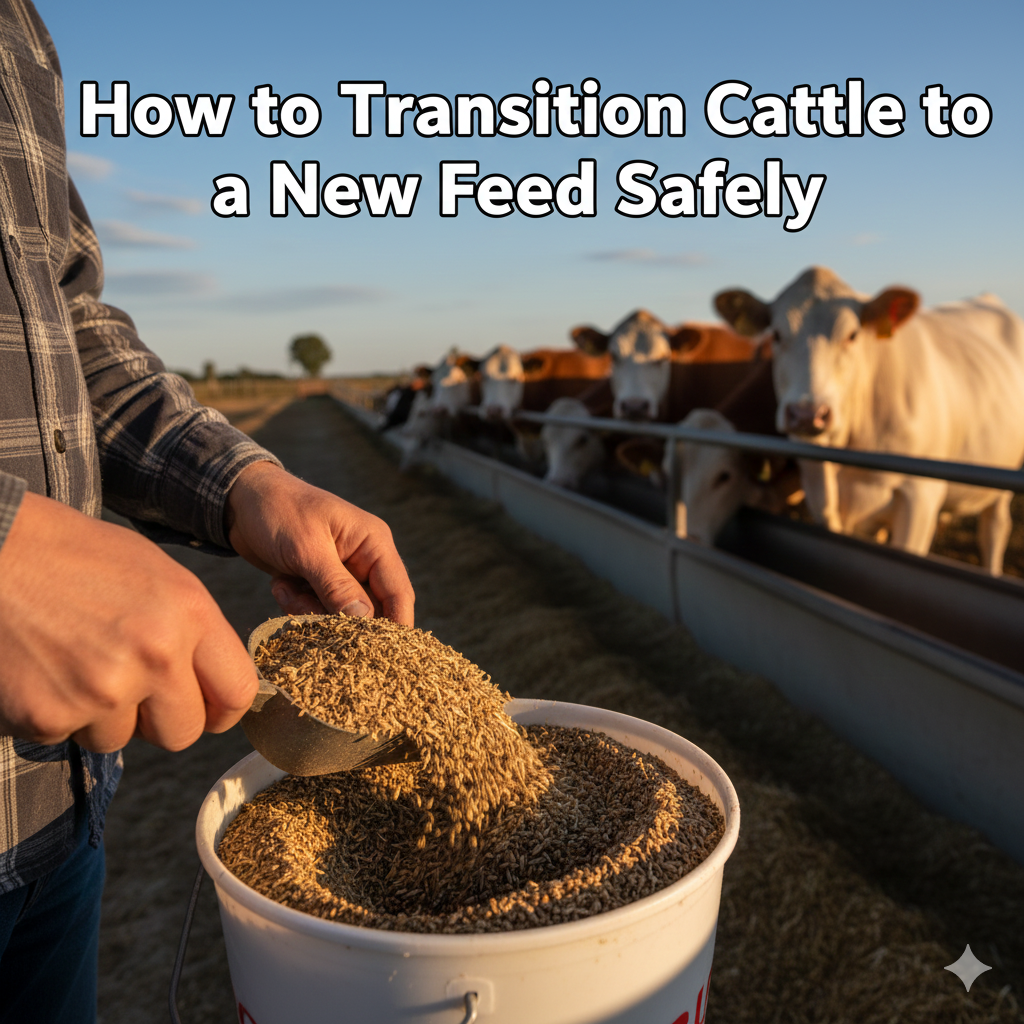
Cattle feeding sounds simple, but many farmers have seen how quickly things can go wrong when cattle feed is changed. One sudden change can lead to loose dung, reduced milk yield, bloating, or even sick animals that stop eating altogether.
As a livestock owner, if you wish to switch cattle feed due to seasonal changes, nutritional needs, or to lower the cost of your cattle feeds, the new feed’s quality and how you introduce it matter.
This guide walks you through a safe, step-by-step feed transition plan that farmers can actually follow on the ground, without guesswork.
Why You Should Never Rush a Feed Change
If a proper cattle feeding transition isn’t done, key risks in cattle are:
- Digestive Upset
- Diarrhea/Constipation
- Bloat
- Acidosis
- Decrease in milk production.
- The immune system gets weakened.
- Lower performance
- Decrease in growth and weight loss
- Less feed intake
- Higher mortality
Do Supplements Help During Feed Transition?
To minimize digestive upset during feed transition, use the best cattle feed transition products, such as prebiotic supplements, Magnesium oxide, Ionophores, Yeast cultures, Buffers (sodium bicarbonate), and Probiotics. These transition support products help in better digestive health. Appropriate supplements, with the correct dosage, should be used in accordance with your particular feeding program under the advice of a veterinarian.
Transition period between the old and new feed
Depending on several factors, the transition to the new feed ranges from 7 to 21 days.
Feed transition duration is affected by:
- Type of feed change: 14-21 days for hay to grain transition, whereas for similar hay types, 7-10 days are only required.
- Age of cattle: Young calves require more time for the feed transition.
- Diet Change: If protein, energy, or fiber contents are changed, there will be a longer feed transition time.
- Health status: For sick animals, slower feed transitions should be given
- Previous diet stability: Cattle on a diet for months requires more time.
In case of major feed changes, use a temporary bridge feed between the old and new feed to avoid digestive stress and rumen damage.
Step-by-Step Cattle Feeding Transition Plan
Day 1-7: Introduction to new feed
Days 1st-3rd:
Offer 75% old feed with 25% new feed to cattle. Observe cattle closely for health or behavior changes.
Days 4th-7th:
50% new feed with 50% old feed should be mixed.
Days 8 – 14: Increase the new feed quantity
Days 8th-10th:
25% old feed should be mixed with 75% new feed. Follow consistent feeding times.
Days 11th – 14th:
Complete the transition to 100% new feed. Monitor closely for 3-5 days, and extend the phase to 21 days for high-risk changes such as hay to grain.
What to Monitor Daily in Cattle Feeding During Transition
- The appetite of the cattle should be the same.
- The left side of the rumen should be full, but not bloated.
- Manure should be firm in consistency.
- Check for any behavior changes.
- Increase or maintain consistent water intake.
- No change in body conditions – there should be no weight loss during the new feed transition time.
Best Practices for Introducing New Feed to Livestock
Pre-Transition Preparation
- Make sure the vaccination of cattle is up to date.
- Avoid feed transition during extreme weather conditions, transport, and weaning.
- Ensure the new feed supply is available and ready.
- New feed’s quality and nutritional content should be checked.
- The feed transition will be smoother during calm weather.
- Sufficient bunk space for all animals
During the Transition
- Feeding times should be consistent.
- Proper mixing of feeds so that cattle won’t sort between new and old feed
- Adequate bunk space for all animals so all can eat simultaneously (18-24 inches per head)
- An increase in water intake helps improve digestion, so keep water fresh and easily accessible.
- Multiple feedings in a day to avoid stress
- Stick to the transition steps even if cattle remain fine.
- Feed transitions are affected by heat stress in cattle, so monitor weather conditions.
Special Cattle Feeding Guidelines for Different Feed Changes
Hay to grain transition:
- A minimum of 21 days of adaptation period is required.
- Gradual increase in grains (no more than 1-2 pounds per day)
- Along with grain, provide long-stem roughage.
- Never introduce more than 0.5% of body weight in grain initially.
Pasture to dry feed:
- Transition over 10-14 days
- Along with small amounts of dry feed, supplement the pasture.
- Complete the transition before the pasture quality declines due to seasonal change.
Changing grain types:
- 10-14 days moderate transition period
- Transition between similar energy sources will be easy.
- Keep a close eye on starch levels.
Reference Checklist Overview for a Safe Feed Transition
- A 7-21-day transition period should be planned based on the feed type.
- Mix 75% old feed with 25% new feed at the beginning of the transition.
- Gently increase the new feed by 50/50, 25/75, then 100% rule
- Keep a check on digestive issues, feed intake, and behaviour changes of cattle.
- Access to fresh, clean water
- Avoid stressors during the transition period.
- For high-risk transitions, use buffers and probiotics.
- Never rush the transition process.
- For future reference, keep detailed records of the transition.
- Your veterinarian’s emergency contact information should be ready.
Take Control of Your Herd’s Health Today
With this reference checklist, a smooth and successful feed transition is possible in cattle farming. The lifeline of livestock farmers can be profitable. Follow these proven steps without any compromise to improve your cattle’s health.
Take your time, observe daily, and never rush a feed change. A careful transition today prevents bigger losses tomorrow.